


Lancaster and the Spirit of the Hanged Town
- superolga7
- Oct 31, 2025
- 5 min read
It’s odd and thrilling to discover that the cobbled streets of a city once known for its gallows and witch trials are now scented with malted barley. Lancaster has never quite outrun its ghosts, who hide in the castle’s shadow, the damp air rolling off the river Lune and in the flicker of lanterns as the streets empty for the night.

Yet lately, another kind of spirit has begun to rise. A spirit born of stills
and barrels. Lancaster Brewery, long celebrated for its crisp lagers, has crossed into unfamiliar territory: whisky. It feels poetic that in a city once famed for executions, something new is being brought to life.
The Hanged Town
To understand whisky in Lancaster, one must first understand the city’s shadows. At the heart stands Lancaster Castle, a fortress whose stones carry the weight of age-old judgment. Here, in 1612, the 11 Pendle Witches were tried and condemned, their names woven forever into England’s folklore.
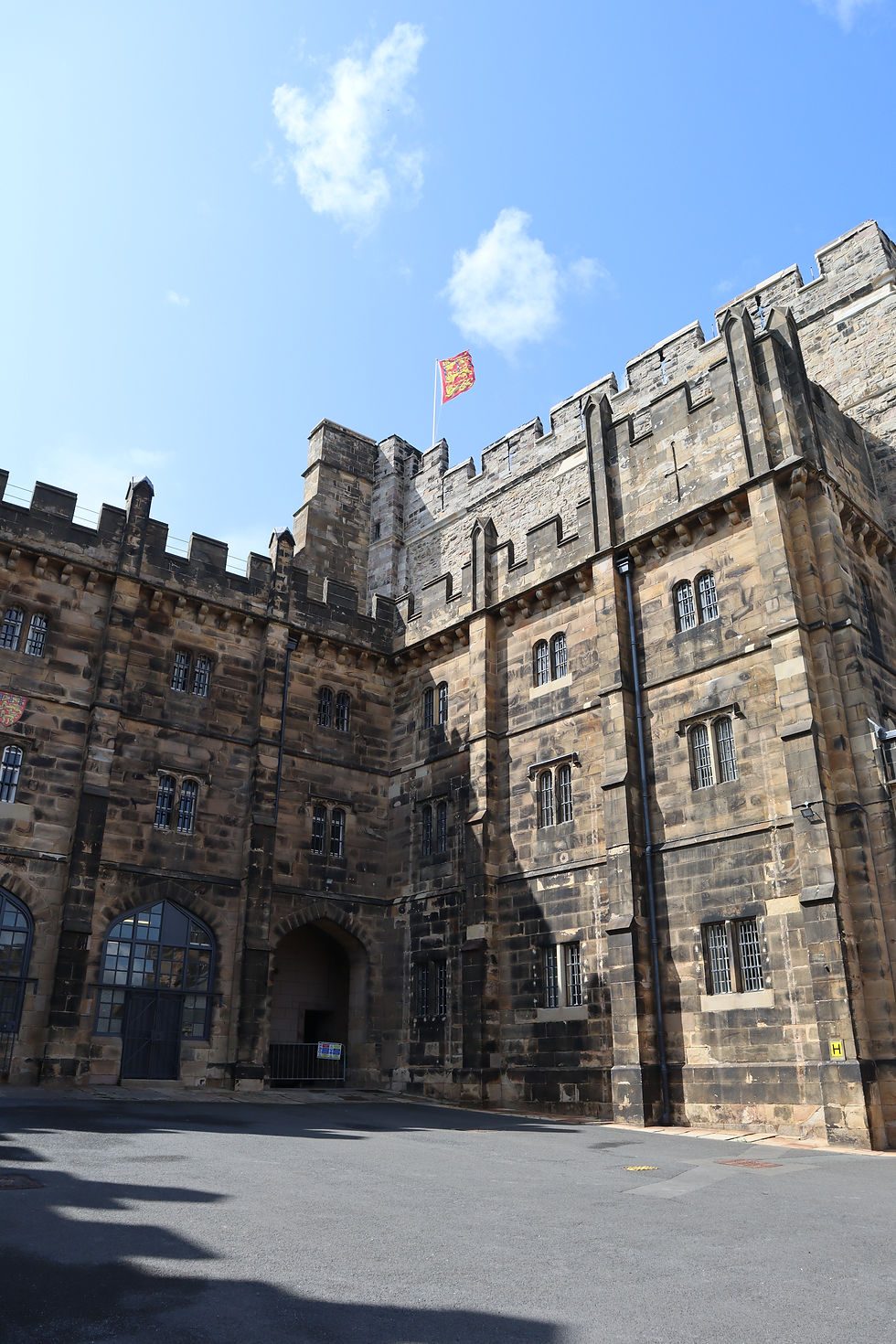
For centuries, the castle doubled as courthouse and gallows, earning Lancaster the moniker the Hanging Town. The last public execution took place 1910 but the reputation has never faded.
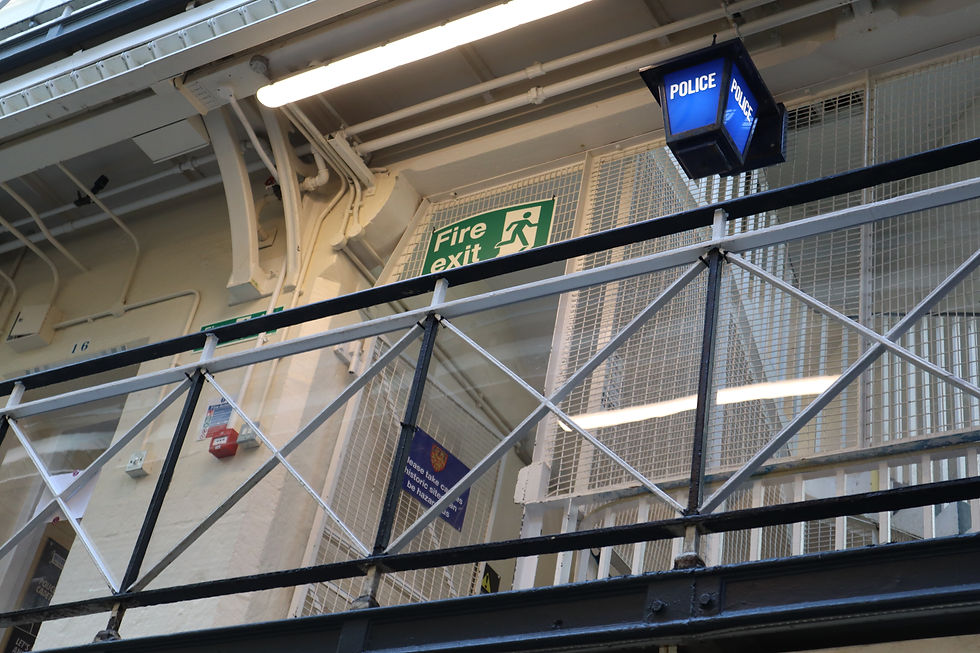
It is against this backdrop that the making of whisky feels almost like an act of transformation. Where once the condemned awaited their end, casks now wait for their beginning. Oak replaces iron, yeast replaces blood and the city’s dark inheritance is distilled into something the living can taste.
From Beer to Whisky
Lancaster Brewery began in 2005 with a simple mission: to brew unpretentiously good beer. Their Blonde, Amber and Black quickly became staples and the brewery became an important part of the city’s modern life. Awards came, as did expansion, but the core remained the same: honest, flavourful beer.
Then came whisky.

At first, it sounded improbable, even heretical. But when one remembers that whisky begins as beer without hops, the leap makes sense. Lancaster already had the brewing expertise, the live yeast, the water and the discipline. All that was needed was patience, ambition and perhaps a touch of madness.
And so the brewery gave birth to Lancaster Spirits Company, a sister venture with copper stills, new warehouses and a willingness to stand in the shadow of Scotland while daring to be different.

Lancaster Brewery didn’t abandon its craft to chase whisky; it evolved into it and their liquid isn’t an imitation of Scotland’s proud tradition but a distinctly English voice speaking in a northern accent, patient, grounded and maybe slightly mischievous.
The Distillery Tour
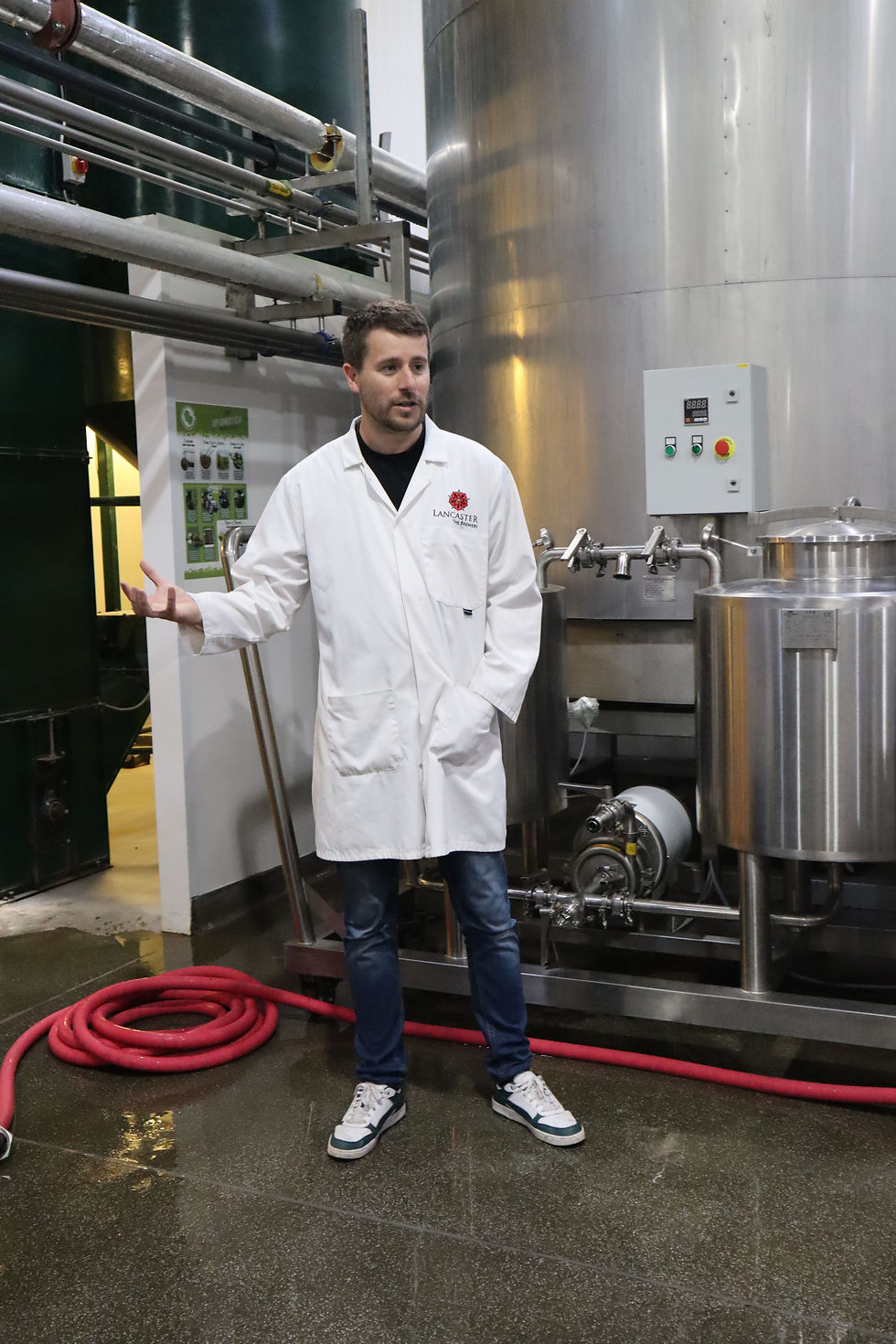
Guided by the commercial manager Chris Pateman and senior manager Gemma Carrasice, I entered their world. Chris spoke with a passion so contagious it felt almost evangelical, describing yeast with the fervour of a poet and malt with the intensity of a preacher.
We began, fittingly, at Lancaster Castle. Chris insisted that to understand the whisky, you must first feel the weight of the city’s history. The castle loomed grey and immense, its stones bearing the memory of the witches and the countless footsteps of the accused.

Later that evening, dinner was served and with it, the first dram arrived: a 9 month old whisky from Pedro Ximénez casks, made from 97.5% pale ale malt and 2.5% crystal malt. Rich with sultanas and dark chocolate, it went uncannily well with crème brûlée.

My revelation of the evening was a whisky butter, spread across freshly baked bread, melting like some wicked little spell. (They need to sell it immediately.)
Whisky by Hand
Nothing is rushed at the Lancaster Spirits Company Distillery. The mash tuns are stirred by hand, enzymes added sparingly to coax more sugar from the grain and the wash is checked every two hours by eye, smell and instinct.

Four days’ minimum fermentation, yielding a wash smelling strongly of caramelised bananas and foaming with a curious note of overripe fruit. Long distillations of seven to eight hours follow, monitored by human judgment. The water is drawn from the Bowland aquifer. Solar panels on the roof power the work. At every stage, the same yeast that has served as Lancaster Brewery beer’s backbone for nearly twenty years plays its part.

Constance, the gleaming pot still, dominates the room like an idol. Named after a historic Lancastrian figure, she is part steel, part copper - a deliberate design to limit copper contact and preserve the spirit’s sweetness. Around her, the warehouse stretches like a chapel, rows of barrels lined like pews, each one silently waiting.
Tasting the Spirits
The warehouse is an alchemist’s laboratory. I tasted four spirits: The first, bready and sweet, baked apples and ice cream.

Second came a thick and herby, wheated bourbon cask, sweetness and earth in perfect balance. The third pulled from heavily toasted Rioja casks had spicy pears and apple skin, smoky and restless, softening as it waited in the glass.
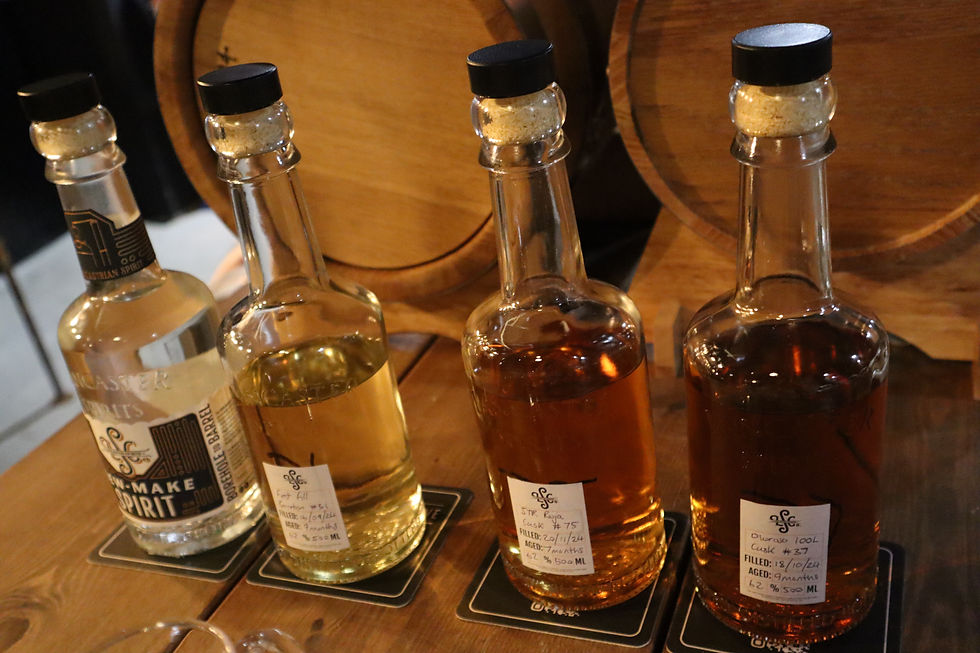
The final dram, already hinting at Oloroso’s plum sweetness, oaty and dry, as though conjuring the harvest. Even at nine months, the spirit was startling, alive and supremely delicious.
Some say the angels’ share is lost to the heavens; in Lancaster, I suspect the witches are taking their cut instead.
The Master Joins
And now comes the news that elevates Lancaster’s whisky from local curiosity to serious contender. Lancaster Spirits Company has partnered with Max McFarlane, one of Scotland’s most respected whisky makers. With over forty-five years in the industry, McFarlane shaped whiskies for Glengoyne, Tamdhu, Bunnahabhain, and even the Famous Grouse.

His expertise in cask selection and maturation is legendary; his reputation as a Keeper of the Quaich cements his place among whisky’s elite. McFarlane’s role is to oversee wood policy, maturation and flavour development and refine the spirit’s unique character. It’s a union of a city that embraces its shadows and a man who has spent his life perfecting light within them.
Spirits in the Glass
So what makes Lancaster whisky truly unique you ask? The answer goes beyond the production methods. It’s the setting. Few distilleries can claim a castle of executions as their neighbour. Few age their whisky in a climate so damp and restless that maturation seems to hurry forward as if chased by unseen hands.

The result is the dram that haunts the palate with ester-rich, complex notes of
chocolate, red fruits, herbs and even smoke. These are the whiskies that taste like Lancaster itself.
The Last Word
Lancaster has always been a city of ghosts. Once, they gathered at the gallows but now, they gather in the glass. The whisky of Lancaster Spirits Co. doesn’t run from that history. Instead, it communes with it, turning the city’s darkness into something delectable. When the first official release emerges in 2027, expect to taste the echo of cell doors, the whisper of witches and the heartbeat of a city
fogged with legends.
Drinking it would be raising the dead, and toasting them.


Comments